Living with persistent depression, anxiety, PTSD, or other mental health symptoms can become especially frustrating when previous treatment approaches have not provided adequate relief.
For some patients, this leads to conversations with healthcare providers about additional treatment options, including ketamine therapy.
Interest in ketamine therapy in Kansas City has increased as more people learn that ketamine is used in certain clinical settings under medical supervision. But increased awareness has also produced plenty of confusing information online.
Is ketamine the same as a traditional antidepressant? What happens during an IV ketamine appointment? Does everyone with depression qualify? How do you evaluate a ketamine clinic? And what should you expect before deciding whether treatment is right for you?
Understanding these questions is important before making a treatment decision.
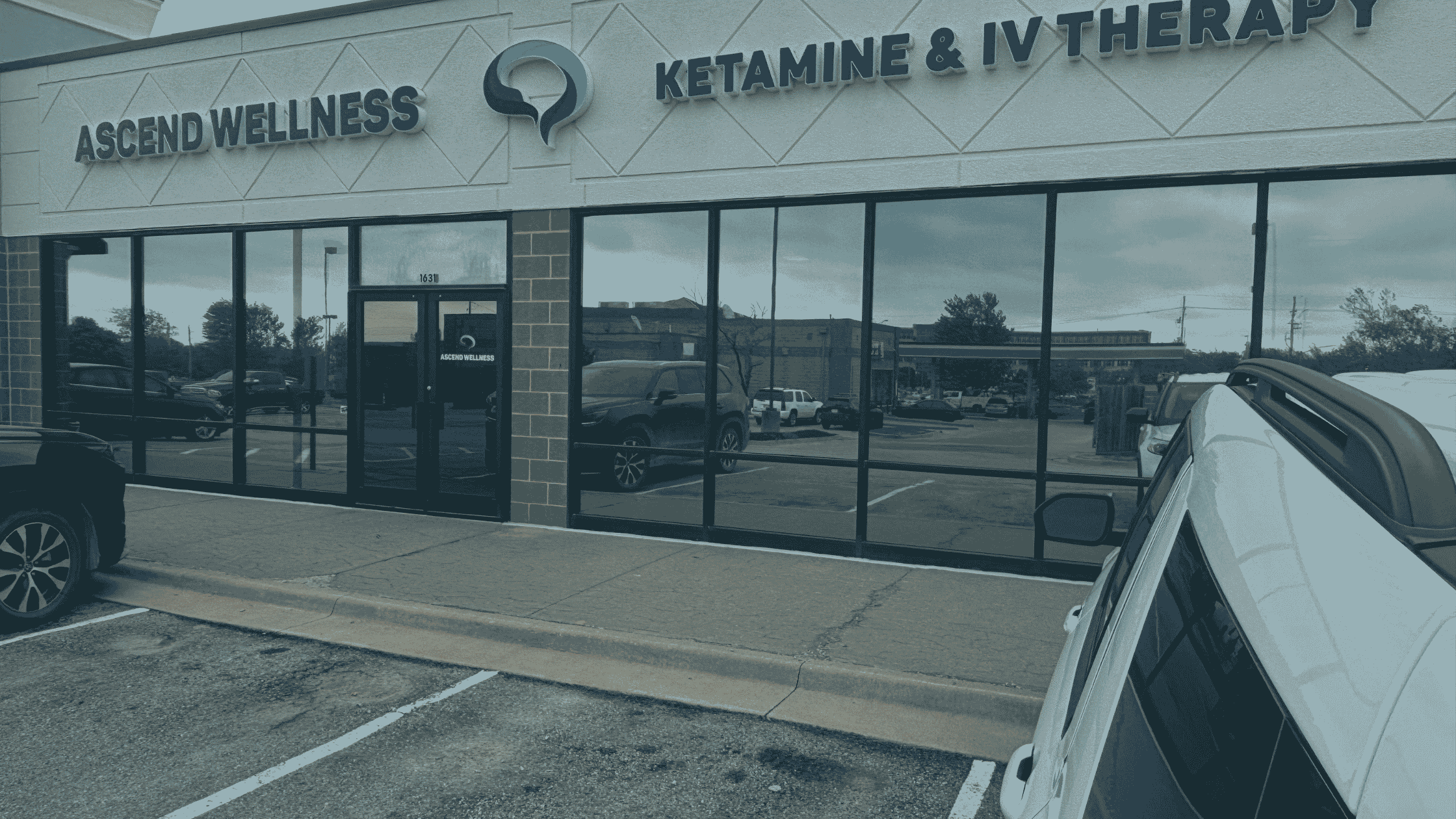
Ascend Wellness Centers provides medically supervised IV ketamine therapy from its Lee’s Summit location serving the greater Kansas City area. Treatment begins with clinical evaluation because ketamine therapy is not automatically appropriate for every patient or every mental health concern.
This guide explains the fundamentals patients should understand before scheduling a consultation.
What Is Ketamine Therapy?
Ketamine is a medication with a long history of medical use. In appropriate clinical settings, healthcare professionals may also use ketamine as part of treatment strategies for certain mental health conditions.
IV ketamine therapy involves administering ketamine intravenously in a controlled healthcare environment.
The intravenous route allows the clinical team to administer medication according to the patient’s individualized treatment plan while monitoring the patient throughout the appointment.
Ketamine treatment should therefore be distinguished from unsupervised or recreational ketamine use.
Clinical treatment involves medical screening, controlled administration, monitoring, and follow-up.
Why Is Ketamine Being Discussed for Mental Health?
Many traditional psychiatric medications influence neurotransmitter systems such as serotonin or norepinephrine.
Ketamine works differently.
One of the primary systems associated with ketamine’s effects involves glutamate, an important neurotransmitter involved in communication between nerve cells.
Researchers have studied how ketamine’s interaction with glutamate-related pathways may be relevant to certain mental health conditions.
For patients, however, the important takeaway is simpler: ketamine is not simply another version of a conventional antidepressant.
Its different mechanism is one reason providers may discuss it in certain situations, particularly when previous approaches have not produced an adequate response.
That does not mean ketamine should automatically replace existing treatment.
The appropriate treatment strategy depends on the individual patient.
What Does Treatment-Resistant Depression Mean?
One phrase patients frequently encounter while researching ketamine is treatment-resistant depression.
Generally, the term describes depression that has not adequately improved despite appropriate previous treatment attempts.
A patient may have tried different medications, psychotherapy, or combinations of treatments and still experience significant symptoms.
This can be discouraging.
It can also lead patients to assume they have exhausted every possible option.
A clinical evaluation can help determine what has already been attempted, whether previous treatments were given an adequate opportunity to work, and what additional options may warrant discussion.
Ketamine therapy may be considered for some appropriately evaluated patients, but treatment decisions need to be individualized.
Conditions That May Lead to a Ketamine Consultation
People search for ketamine treatment for many reasons.
At Ascend Wellness Centers, IV ketamine services focus on mental-health-related indications and clinical evaluation.
Patients may discuss ketamine with a provider in relation to concerns including:
- Depression
- Treatment-resistant depression
- Anxiety
- Post-traumatic stress disorder (PTSD)
- Certain severe or persistent mental health symptoms
The presence of one of these conditions does not automatically establish eligibility.
A qualified healthcare professional needs to review the patient’s situation before recommending treatment.
Why Evaluation Comes Before Treatment
It can be tempting to view ketamine as something that can simply be booked online after reading about its potential benefits.
Medical treatment should not work that way.
Before ketamine therapy is considered, a provider needs to understand the patient.
Medical History
The clinical team may need information about existing medical conditions, previous procedures, current health concerns, and other relevant factors.
Medication History
Current and previous medications can provide important context.
Patients should provide accurate information rather than stopping or changing medications independently before a consultation.
Mental Health History
Understanding the symptoms being treated, previous diagnoses, prior treatment attempts, and current mental health support helps the provider evaluate the broader clinical picture.
Treatment Goals
Patients may arrive with very different expectations.
A useful consultation should include a realistic conversation about what the patient hopes to improve and what treatment can and cannot reasonably promise.
What Happens During IV Ketamine Therapy?
Exact protocols can vary based on the patient’s clinical needs.
However, IV ketamine treatment generally involves several stages.
Before Treatment
Patients receive instructions from their healthcare team regarding preparation for the appointment.
Following these instructions is important.
Patients should also disclose medications, supplements, medical conditions, and any changes in their health.
During Treatment
An IV is placed so the medication can be administered according to the treatment plan.
The patient remains in a clinical environment while the treatment takes place.
The care team monitors the patient and can respond if concerns arise.
After Treatment
Patients are observed as appropriate before leaving the clinic.
The clinical team provides instructions regarding transportation, activities, follow-up, and anything else relevant to the patient’s treatment.
Patients should follow those instructions carefully rather than assuming they can immediately resume every normal activity.
What Does Ketamine Treatment Feel Like?
This is understandably one of the most common questions patients have.
Individual experiences vary.
Some people describe temporary changes in perception, awareness, or how they experience their surroundings during treatment.
Because responses differ, patients should discuss what they may experience with their provider before treatment begins.
A clinical environment also matters here.
Knowing that trained professionals are present and monitoring treatment can make the process less uncertain for someone who is nervous about their first appointment.
If anxiety about the treatment itself is a concern, tell the care team.
Questions are part of informed medical care.
How Quickly Does Ketamine Work?
Online discussions about ketamine sometimes focus heavily on speed.
That can create unrealistic expectations.
Patients should not approach treatment assuming they will experience a particular result within a particular number of hours or after a specific number of sessions.
Individual responses vary considerably.
Factors can include the condition being treated, severity and duration of symptoms, previous treatment history, overall health, concurrent treatment, and individual biological response.
Some patients may notice changes differently from others.
The healthcare team should evaluate progress over time and discuss what those changes mean within the patient’s broader treatment plan.
How Many Ketamine Treatments Are Needed?
There is no responsible universal answer that applies to every patient.
Treatment frequency and the number of sessions depend on clinical evaluation and the treatment plan recommended by the healthcare provider.
Patients should be cautious about interpreting another person’s treatment schedule as their own.
Someone else’s experience on social media does not establish what is medically appropriate for you.
Ask the provider:
- Why a particular treatment schedule is being recommended
- How progress will be assessed
- When treatment will be reassessed
- What happens if symptoms do not improve as expected
- What follow-up care is recommended
A good treatment plan should include reassessment rather than simply continuing indefinitely without evaluating progress.
Is Ketamine Therapy a Cure for Depression?
Ketamine should not be presented as a guaranteed cure for depression, PTSD, anxiety, or another mental health condition.
Mental health treatment is individualized and often involves multiple components.
Depending on the patient, these may include medication management, psychotherapy, lifestyle support, psychiatric care, or other clinically appropriate treatments.
Ketamine may become one component of that broader strategy for some patients.
Claims such as “guaranteed results” or “permanent cure” should therefore be treated cautiously.
Healthcare is rarely that simple.
Ketamine Therapy and Existing Mental Health Treatment
Patients considering ketamine may already be seeing a psychiatrist, therapist, primary care provider, or another healthcare professional.
Starting a conversation about ketamine does not mean abandoning that care.
Coordinated treatment can be important.
Patients should tell the ketamine provider about existing treatment and provide an accurate medication history.
Similarly, medication should never be stopped simply because someone is planning to begin ketamine therapy unless the appropriate prescribing healthcare professional instructs them to do so.
The goal is a coherent treatment strategy rather than several disconnected treatments.
What About Ketamine for PTSD?
PTSD can significantly affect daily life, relationships, sleep, emotional regulation, and overall well-being.
People living with persistent PTSD symptoms may explore different treatment options after previous approaches have not provided sufficient improvement.
Ketamine has been studied in relation to PTSD, and some appropriately evaluated patients may discuss it with a healthcare provider.
However, PTSD is complex.
Ketamine should not be viewed as a substitute for every other component of PTSD treatment.
A provider should consider the patient’s history, symptoms, current care, and overall clinical needs before making recommendations.
Ketamine and Anxiety
People also frequently search for information about ketamine and anxiety.
Anxiety encompasses different conditions and symptom patterns, so someone experiencing anxiety should not assume that ketamine is automatically an appropriate treatment.
A clinical assessment can help clarify the symptoms, previous treatments, and whether additional treatment options should be considered.
This is particularly important when anxiety occurs alongside depression, PTSD, medication use, or other mental health concerns.
Why Medical Monitoring Matters
Ketamine is a medical treatment.
That makes the environment in which it is administered important.
A responsible clinical program should include appropriate medical oversight before, during, and after treatment.
Patients researching a ketamine clinic in Kansas City should ask how the clinic handles:
- Patient screening
- Medical history
- Medication review
- Monitoring during treatment
- Follow-up
- Unexpected reactions
- Communication with the clinical team
These questions can reveal much more about the quality of a program than promotional claims on a website.
How to Choose a Ketamine Clinic in Kansas City
Search results for “ketamine near me” can present numerous options.
Choosing based solely on proximity may not be enough.
Consider several factors.
Medical Supervision
Determine who evaluates patients and who oversees treatment.
Ketamine should be administered within an appropriate medical framework.
Individualized Screening
A clinic should evaluate whether treatment is appropriate instead of treating every inquiry as automatically eligible.
Clear Communication
Patients should understand what treatment involves before proceeding.
That includes preparation, monitoring, follow-up, potential risks, costs, and realistic expectations.
Ongoing Monitoring
Ask how progress is evaluated.
Treatment should not consist simply of administering medication without assessing the patient’s response.
Realistic Claims
Be cautious when a clinic guarantees a particular outcome.
Responsible medical communication acknowledges that individual responses vary.
Location and Accessibility
Treatment may involve multiple visits, so practical accessibility matters.
Ascend Wellness Centers’ Lee’s Summit clinic provides an option for patients seeking ketamine treatment in the Kansas City metropolitan area.
Why Lee’s Summit Can Be Convenient for Kansas City Patients
Patients searching specifically for “Kansas City ketamine” may assume treatment needs to be located within Kansas City proper.
The broader Kansas City metropolitan area extends across numerous surrounding communities.
Lee’s Summit provides convenient access for many patients in the region.
Depending on where someone lives or works, a Lee’s Summit clinic may be accessible from communities throughout the Kansas City area.
When evaluating treatment, however, location should remain only one factor.
Clinical quality and appropriate medical supervision are more important than simply choosing the closest result on a map.
Questions to Ask During Your Consultation
Patients should arrive prepared to ask questions.
Consider asking:
Am I an appropriate candidate?
The provider should explain why treatment is or is not being considered.
What should I expect during treatment?
Understanding the process can reduce uncertainty.
How should I prepare?
Follow the clinic’s specific pre-treatment instructions.
What should I expect afterward?
Ask about transportation, activity restrictions, and other post-treatment guidance.
How will you measure progress?
Treatment should include a method for assessing response.
How does this fit with my current treatment?
Discuss existing medications, therapy, psychiatric care, and other treatments.
What are the potential risks?
Patients deserve an informed discussion of potential benefits, limitations, and risks.
What If You’re Nervous About Your First Treatment?
Being nervous about an unfamiliar medical treatment is understandable.
Many patients researching IV ketamine have never received this type of therapy before.
Instead of hiding those concerns, discuss them with the care team.
Ask what happens from the moment you arrive until you leave.
Understanding the process can make the experience more predictable.
Patients can also ask what monitoring occurs and who will be available during treatment.
A healthcare team should be willing to explain the process rather than expecting patients to proceed without understanding it.
Mental Health Emergencies Require Immediate Help
Ketamine consultation and routine outpatient treatment are not substitutes for emergency intervention.
If you or someone around you is experiencing an immediate mental health crisis, suicidal thoughts, or risk of self-harm, seek immediate assistance.
In the United States, call or text 988 to reach the Suicide & Crisis Lifeline.
If there is immediate danger, call 911 or go to the nearest emergency department.
When possible, involve a trusted person who can remain nearby and help obtain immediate professional support.
Looking Beyond a Single Treatment
One of the most useful perspectives when considering ketamine is to avoid thinking about mental healthcare as a choice between one treatment and another.
For many patients, improvement involves several complementary elements.
These can include:
- Appropriate medical care
- Psychiatric medication management
- Psychotherapy
- Healthy sleep routines
- Physical activity when appropriate
- Social support
- Stress management
- Follow-up with healthcare professionals
Ketamine may be considered within that larger framework for appropriate patients.
Ketamine Therapy at Ascend Wellness Centers
Ascend Wellness Centers provides IV ketamine therapy with medical evaluation and ongoing clinical oversight.
For patients in the Kansas City area, treatment is available through the Lee’s Summit, Missouri location.
The process begins with consultation rather than assuming treatment is appropriate based solely on symptoms or an online inquiry.
That distinction matters.
Patients deserve to understand their options, ask questions, and make informed decisions with qualified healthcare professionals.
Taking the Next Step
If you have been researching ketamine therapy in Kansas City because depression, PTSD, anxiety, or related symptoms continue to affect your quality of life, the next step does not have to be committing to treatment.
It can simply be a consultation.
That conversation provides an opportunity to discuss:
- Your symptoms
- Previous treatments
- Current medications
- Mental health history
- Questions about IV ketamine
- Treatment expectations
- Whether further evaluation is appropriate
From there, a healthcare provider can determine what options warrant consideration.
Finally
Ketamine has created new conversations around the treatment of certain persistent mental health conditions, particularly when conventional approaches have not produced adequate results.
But growing interest should not turn a medical treatment into a trend.
Patients considering ketamine therapy should prioritize qualified clinical evaluation, appropriate medical supervision, realistic expectations, and ongoing monitoring.
For people researching ketamine therapy in Kansas City, Ascend Wellness Centers’ Lee’s Summit location provides access to medically supervised IV ketamine treatment within the Kansas City metropolitan area.
The most important first question is not, “How quickly can I get an infusion?”
It is, “Is this an appropriate treatment option for me?”
A consultation with a qualified healthcare provider is where that answer begins.
Considering Ketamine Therapy in the Kansas City Area?
If depression, PTSD, anxiety, or related mental health symptoms continue despite previous treatment, you can speak with the Ascend Wellness team about whether IV ketamine therapy may be appropriate for you.
📍 Ascend Wellness Centers – Lee’s Summit, Missouri
Serving Lee’s Summit and the greater Kansas City area.
Schedule a consultation to discuss your history, treatment options, and questions with a healthcare provider.
If you are experiencing suicidal thoughts, self-harm risk, or an immediate mental health crisis, call or text 988, call 911 when there is immediate danger, or go to the nearest emergency department.